M.O.H DASHOARD
M.O.H DASHOARD
Overview
Overview
Manhours On Hire is a subscription-based platform that provides businesses with on-demand access to skilled professionals.
For this project, I redesigned and rebuilt the client dashboard from scratch, transforming it from a manual, task-heavy interface into an AI-powered project management system.
The new design introduces an AI Project Manager that understands user intent, assigns tasks to internal resources, tracks time usage automatically, and surfaces progress in real time, reducing the need for complex navigation.
This redesign focuses on improving workflow efficiency, clarity, and scalability while aligning the product experience with real business operations and long-term growth.
Manhours On Hire is a subscription-based platform that provides businesses with on-demand access to skilled professionals.
For this project, I redesigned and rebuilt the client dashboard from scratch, transforming it from a manual, task-heavy interface into an AI-powered project management system.
The new design introduces an AI Project Manager that understands user intent, assigns tasks to internal resources, tracks time usage automatically, and surfaces progress in real time, reducing the need for complex navigation.
This redesign focuses on improving workflow efficiency, clarity, and scalability while aligning the product experience with real business operations and long-term growth.
Problem Statement
Problem Statement
Designing clarity from complexity
Designing clarity from complexity
The main problem with the existing dashboard was that it looked outdated and visually cluttered, making it confusing for clients to understand how the platform worked. While the Kanban view existed, it lacked clear structure, visual hierarchy, and meaningful context around time usage and task progress. Clients struggled to see where their purchased hours were being utilized, which tasks were consuming time, and how work was progressing overall. This lack of clarity reduced trust and made the dashboard feel overwhelming rather than informative, highlighting the need for a clearer, more intuitive, and insight-driven redesign.
The main problem with the existing dashboard was that it looked outdated and visually cluttered, making it confusing for clients to understand how the platform worked. While the Kanban view existed, it lacked clear structure, visual hierarchy, and meaningful context around time usage and task progress. Clients struggled to see where their purchased hours were being utilized, which tasks were consuming time, and how work was progressing overall. This lack of clarity reduced trust and made the dashboard feel overwhelming rather than informative, highlighting the need for a clearer, more intuitive, and insight-driven redesign.
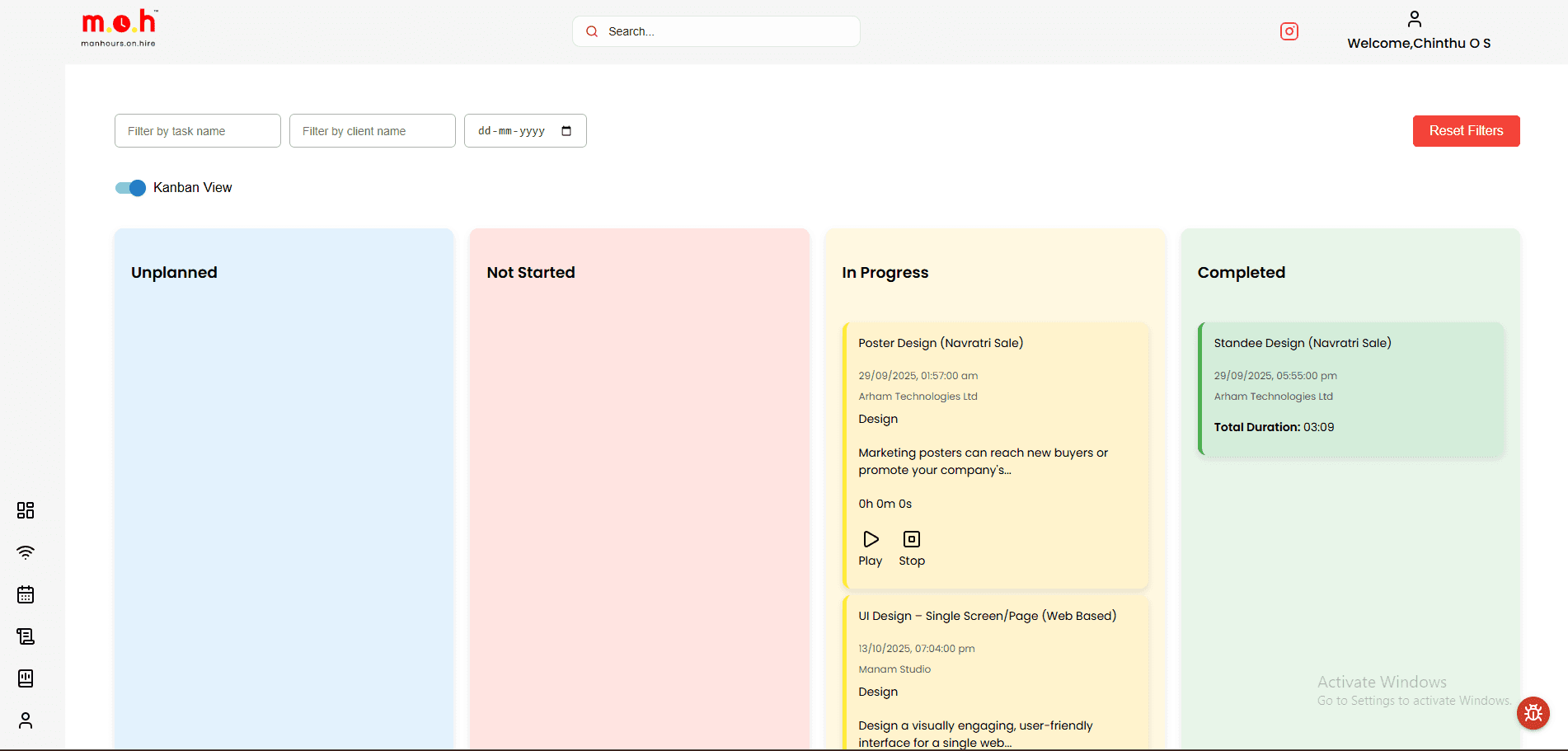
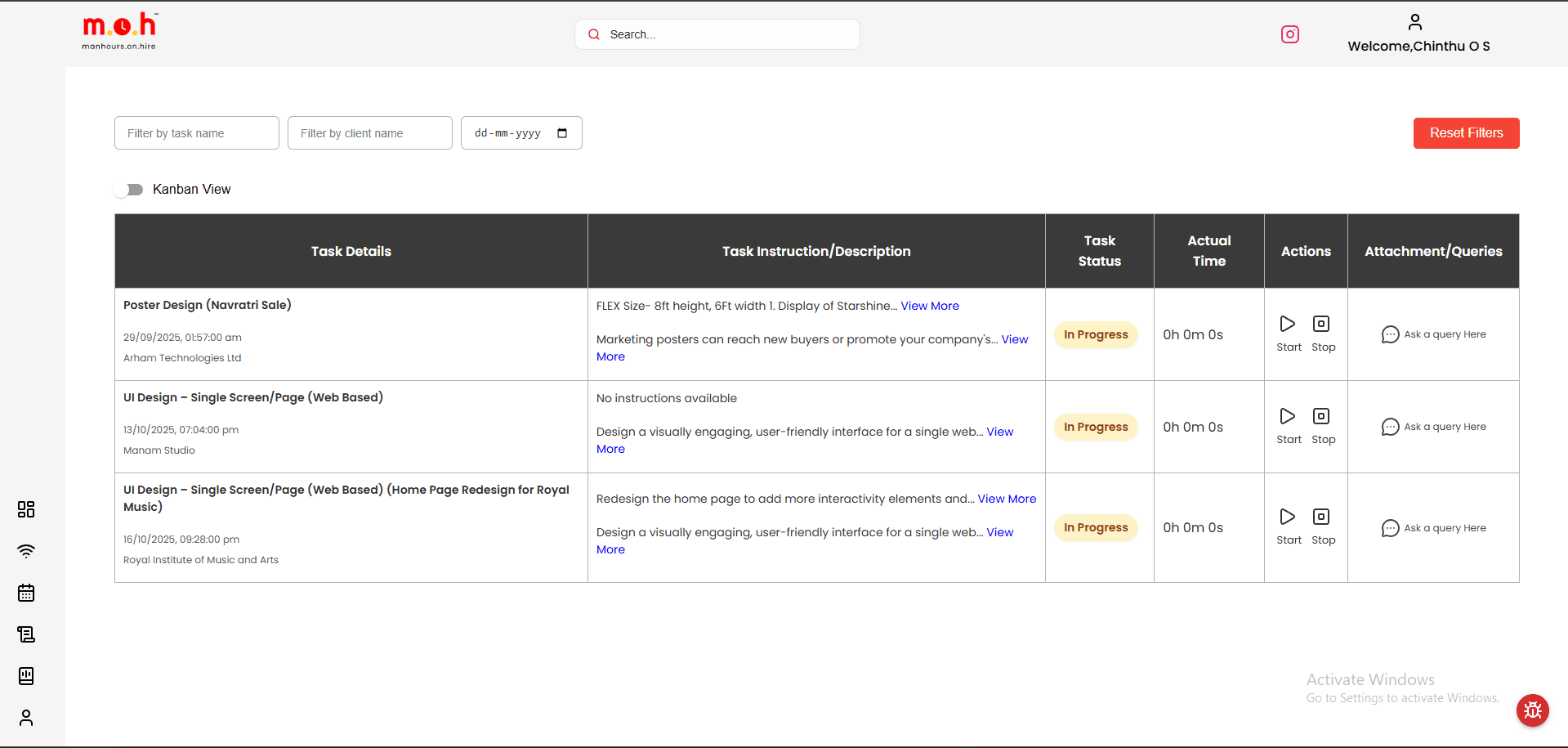
The Dasbboard before re-design
The Dasbboard before re-design
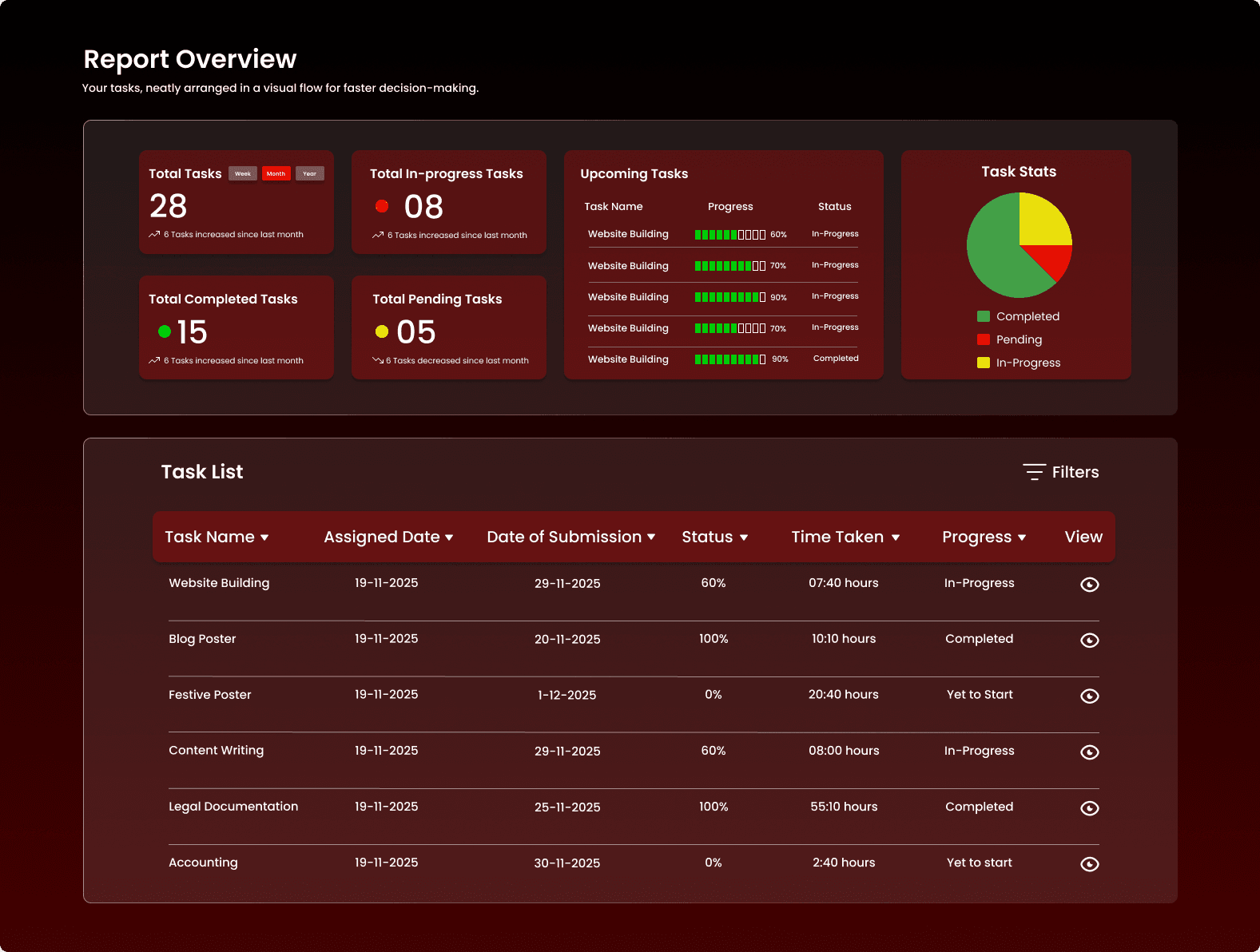
The Dashboard - The design (Project in progress)
The Dashboard - The design (Project in progress)
Figma Prototype Link
Research
Research
Insights that guide design decisions
Insights that guide design decisions
I studied how clients interacted with the dashboard and identified key friction points in task creation, time tracking, and overall usability.
The research phase included a deeper analysis of how users interact with Manhours On Hire, along with a competitive study of platforms like HubSpot, Salesforce, and Zoho to understand how complex business dashboards present information clearly.
These platforms emphasize strong information hierarchy, clear visibility of usage, and actionable insights, rather than overwhelming users with raw data.
Research showed that users preferred less navigation, faster execution, and clearer visibility of effort and time spent.
I also explored AI-assisted workflows used in modern productivity tools, which revealed that users respond better when systems understand intent instead of requiring structured input.
These insights highlighted the need to shift from a task-driven dashboard to an intent-driven, AI-assisted experience.
I studied how clients interacted with the dashboard and identified key friction points in task creation, time tracking, and overall usability.
The research phase included a deeper analysis of how users interact with Manhours On Hire, along with a competitive study of platforms like HubSpot, Salesforce, and Zoho to understand how complex business dashboards present information clearly.
These platforms emphasize strong information hierarchy, clear visibility of usage, and actionable insights, rather than overwhelming users with raw data.
Research showed that users preferred less navigation, faster execution, and clearer visibility of effort and time spent.
I also explored AI-assisted workflows used in modern productivity tools, which revealed that users respond better when systems understand intent instead of requiring structured input.
These insights highlighted the need to shift from a task-driven dashboard to an intent-driven, AI-assisted experience.
Image below : Kanban View of Manhours on Hire, the dashboard (M.O.H)
Image below : Kanban View of Manhours on Hire, the dashboard (M.O.H)
 m.o.h Landing page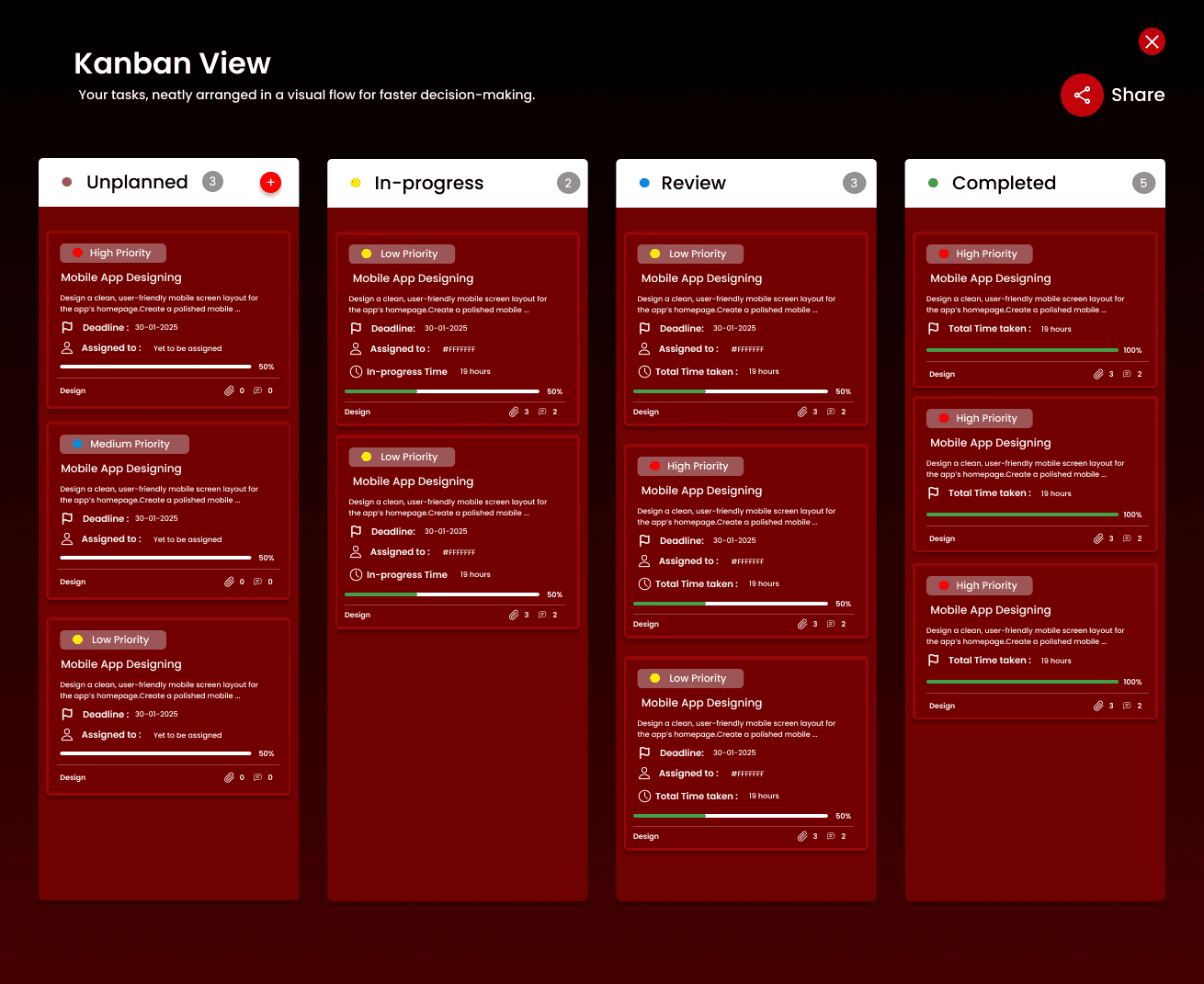
Design
Design
Insights that guide design decisions
Insights that guide design decisions
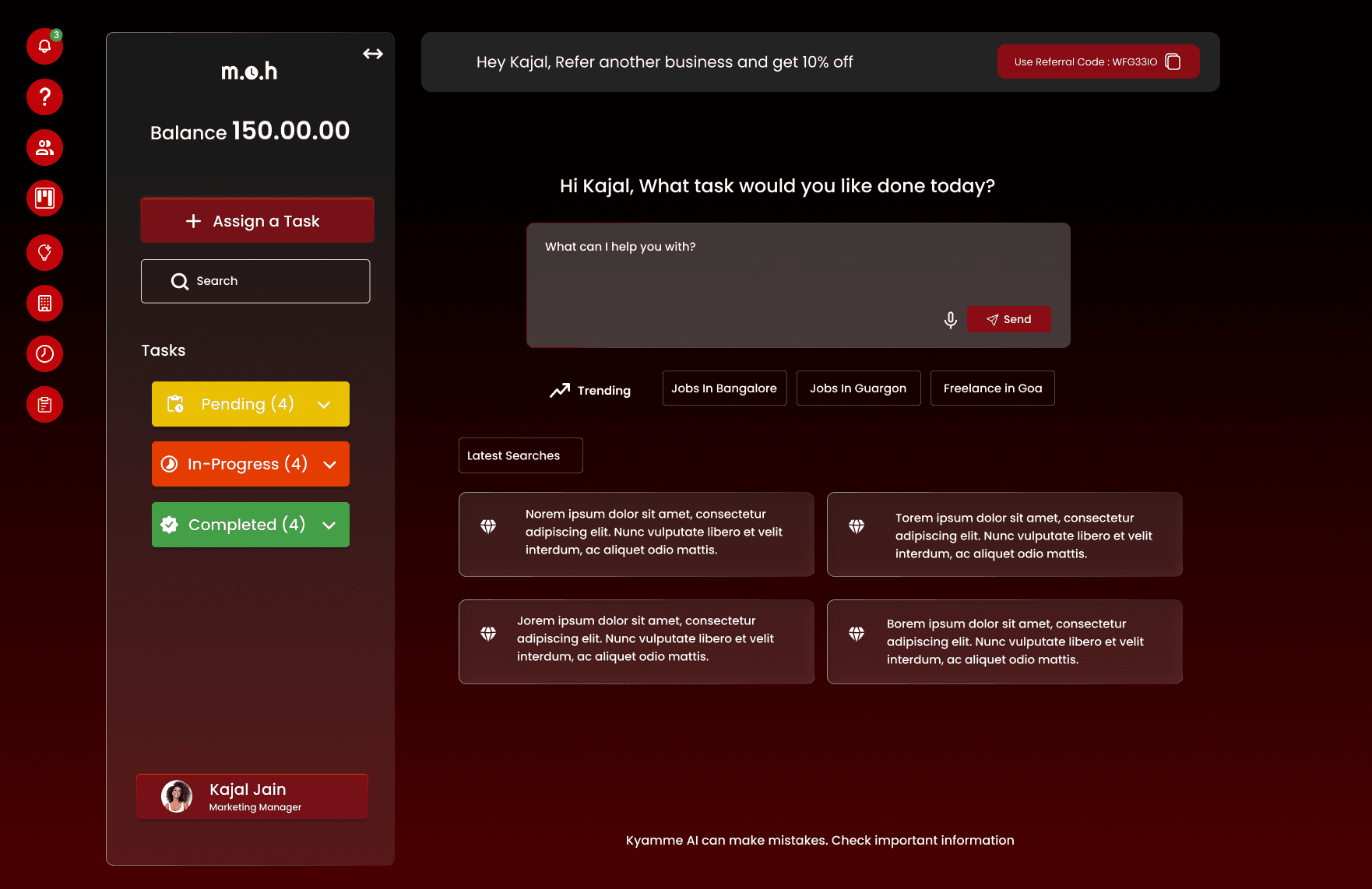
The redesigned dashboard introduces an AI Project Manager as the core interaction layer. Instead of navigating multiple sections, users can now assign tasks directly to the AI in natural language.
The AI understands the request, breaks it down, assigns tasks to the appropriate internal resources, and tracks progress automatically.
A redesigned Kanban view supports better visibility, showing task status, priority, deadlines, and time spent in a clean, scannable layout.
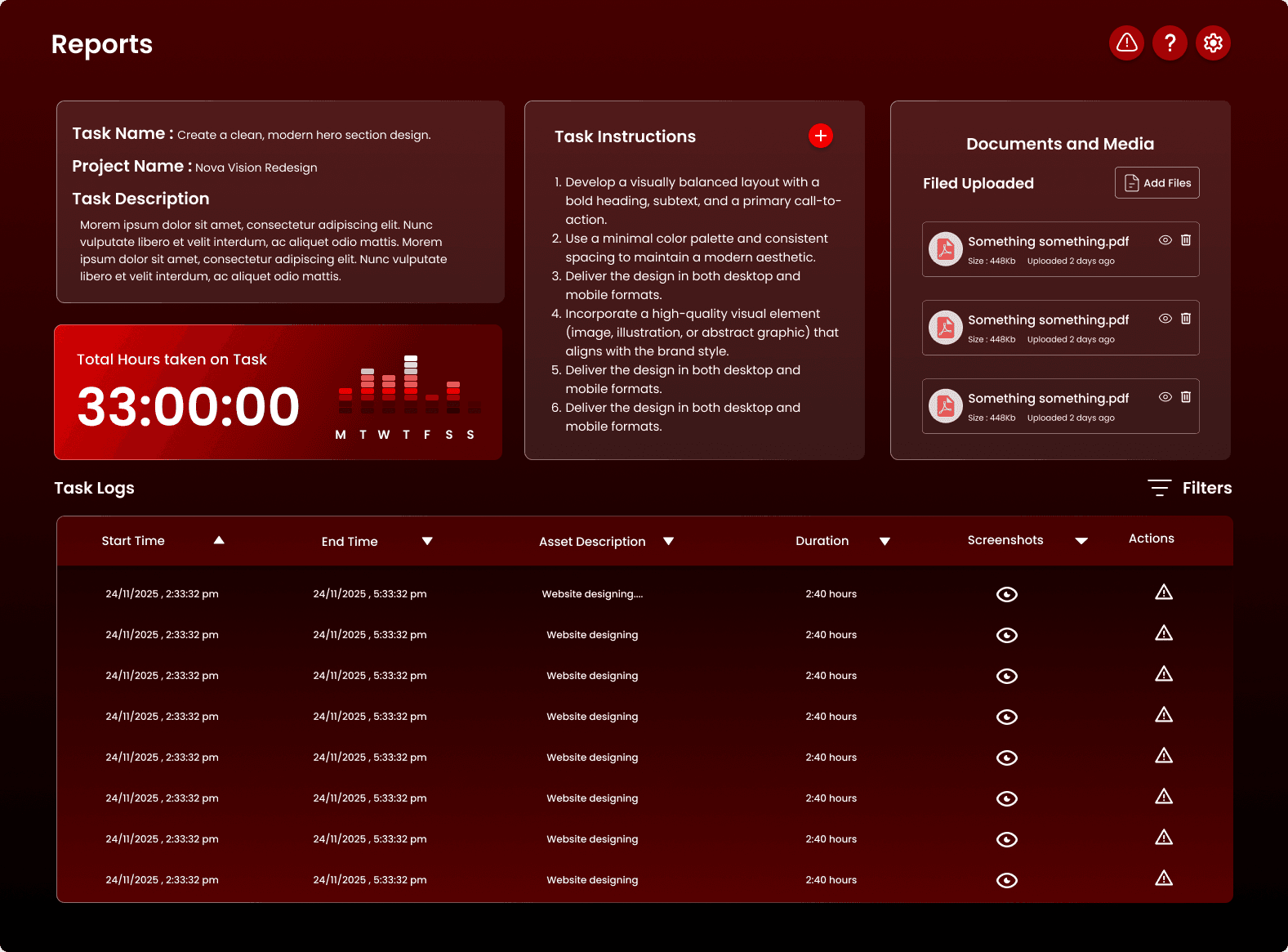
The system also uses AI to track client time usage, monitor effort across tasks, and present this data transparently within the dashboard. The UI focuses on reduced cognitive load, clear hierarchy, and minimal interaction steps—balancing automation with control for the user.
The redesigned dashboard introduces an AI Project Manager as the core interaction layer. Instead of navigating multiple sections, users can now assign tasks directly to the AI in natural language.
The AI understands the request, breaks it down, assigns tasks to the appropriate internal resources, and tracks progress automatically.
A redesigned Kanban view supports better visibility, showing task status, priority, deadlines, and time spent in a clean, scannable layout.
The system also uses AI to track client time usage, monitor effort across tasks, and present this data transparently within the dashboard. The UI focuses on reduced cognitive load, clear hierarchy, and minimal interaction steps—balancing automation with control for the user.
Outcome
Simple, bold.
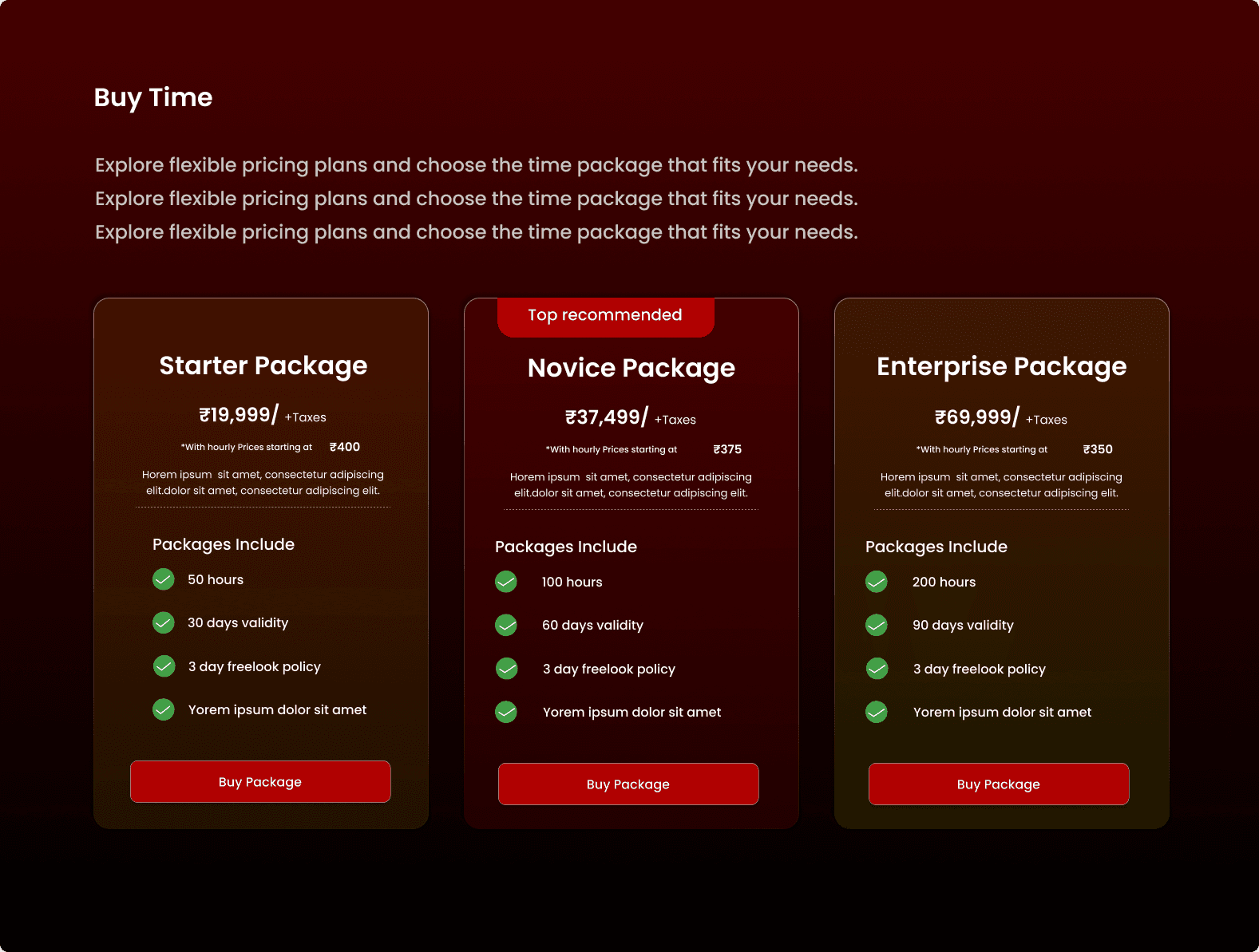
The redesigned website clearly communicates the Manhours On Hire value proposition, making services and pricing easy to understand while presenting a modern, professional, and trustworthy look.
It improved user flow and engagement, reduces confusion, and decreases support inquiries related to service details.
The clear presentation of offerings has also helped build client trust, leading to higher conversion rates and more successful client interactions.
Overall, the redesign aligns the brand visually with its subscription-based model and showcases my ability to redesign and build a product from scratch, translating business goals into a user-focused digital experience that drives both usability and measurable business impact.

READY TO COLLABORATE?
Have a project in mind?
Let’s create something extraordinary together
READY TO COLLABORATE?
Have a project in mind?
Let’s create something extraordinary together
Outcome
Simple, bold.
The redesigned dashboard delivers a clean, intuitive, and information-rich experience that gives clients clear visibility into task progress and time utilization.
The improved visual hierarchy and redesigned Kanban view make it easy for users to understand what is in progress, what has been completed, and how their subscribed hours are being used.
The integration of an AI Project Manager further elevates the experience by reducing manual effort—clients can simply assign tasks to the AI, which interprets requirements, allocates work to internal resources, and tracks execution time automatically.
Together, the refined UI and AI-driven workflows reduce confusion, improve trust, and create a more efficient, scalable system that supports both user needs and the organization’s operational growth
READY TO COLLABORATE?
Have a project in mind?
Let’s create something extraordinary together
READY TO COLLABORATE?
Have a project in mind?
Let’s create something extraordinary together